Stein, Tom
Contact
Chair of Product Dev.& Eng. Design
Leonhardstrasse 27
8092
Zürich
Switzerland
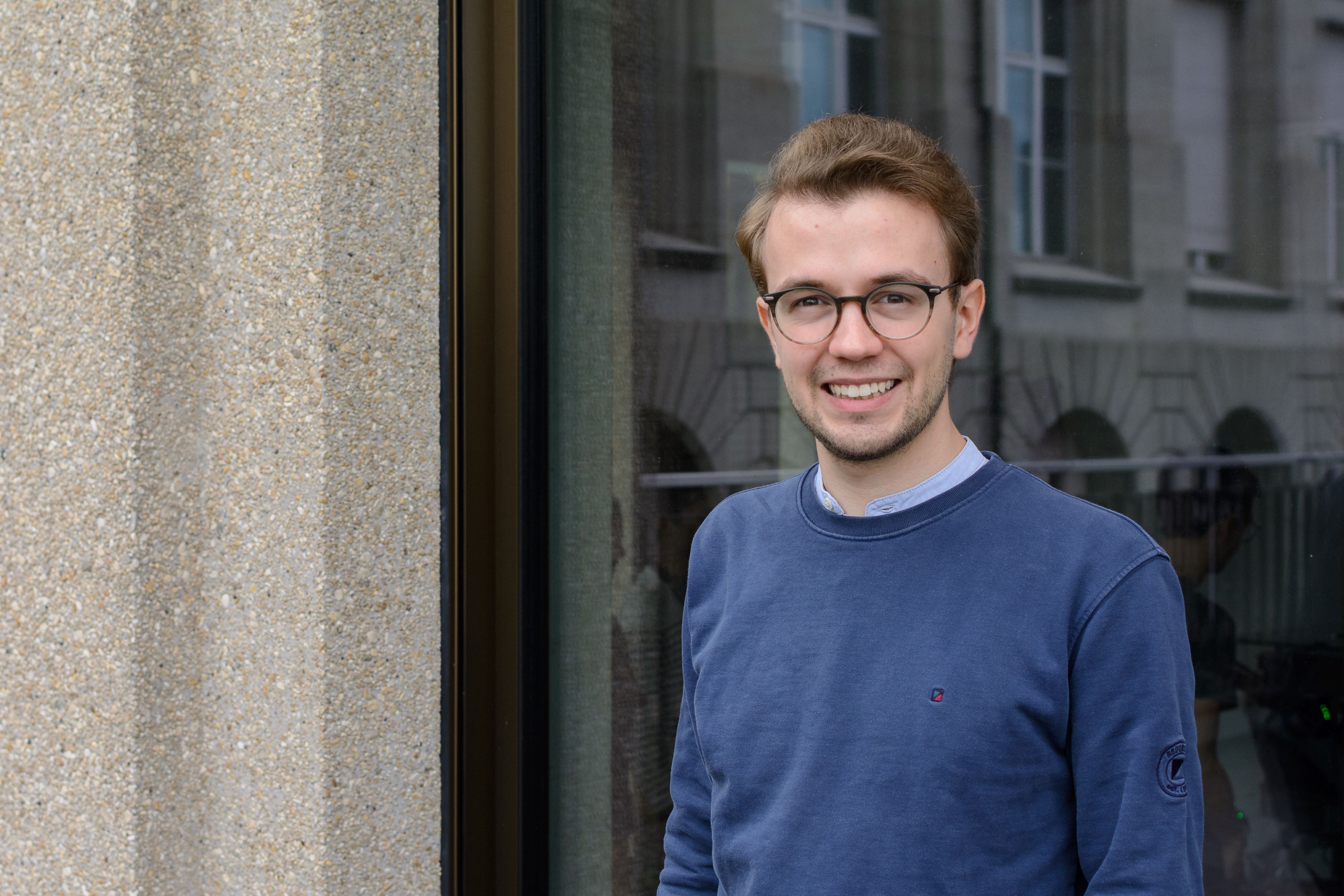
Tom grew up in Dülmen, Germany. He studied computer science at TU Dortmund and graduated in 2024 with a master's degree. As part of an Erasmus exchange program, he studied computer science at Leiden University in the Netherlands, with a focus on reinforcement learning and Game AI. He stayed at the Center for Project-Based Learning, D-ITET ETH Zurich, for his master's thesis while working on combining event cameras with embedded machine learning on microcontrollers.
Tom joined pd|z in 2024 to organize the Innovationsprojekt 2024. The class is mandatory for 460 students and makes them solve a complex task assignment in small groups. In 2024, the 88 teams were asked to build an autonomous robot, about the size of a shoebox, capable of delivering Christmas gifts to houses in model size.
Throughout his studies, he started the Fencyboy-Project to solve an issue many livestock farmers face with their electric fences. This got him interested in the topic of product development from both the methodological side and hands-on aspects like design, manufacturing, and business.
In his spare time, he often attends hackathons, meetups, and similar events. Additionally, he mentors people as a volunteer at TechLabs in digital topics like web development and data science.
Tom’s research focuses on building autonomous laboratory systems that integrate design, manufacturing, and testing into a self-improving cycle. See Self-Driving Laboratory.
He explores how manufacturing can evolve from an open-loop fabrication process into a platform for experimentation — where machines not only produce parts but also monitor their production and automatically evaluate their functional performance. This makes them capable of closed-loop design optimization.
His work centers on developing modular, multi-toolhead systems — for example based on the Prusa XL platform — that enable automated testing and material characterization directly after fabrication. A particular interest lies in the use of conductive polymers and other non-standard materials to print embedded sensors and functional structures, allowing the creation of parts that can sense, react, and optimize themselves through feedback.
Ultimately, his goal is to create closed-loop manufacturing pipelines that connect digital design, physical fabrication, and automated evaluation into a continuous optimization process.
Tom also supervises student projects on all levels and welcomes inquiries from students interested in automated testing, self-optimizing manufacturing systems, and functional 3D printing. Thesis topics typically involve both hardware — from CAD to mechatronics — and software, ranging from embedded firmware to high-level data analysis.
Related Topics and Projects: